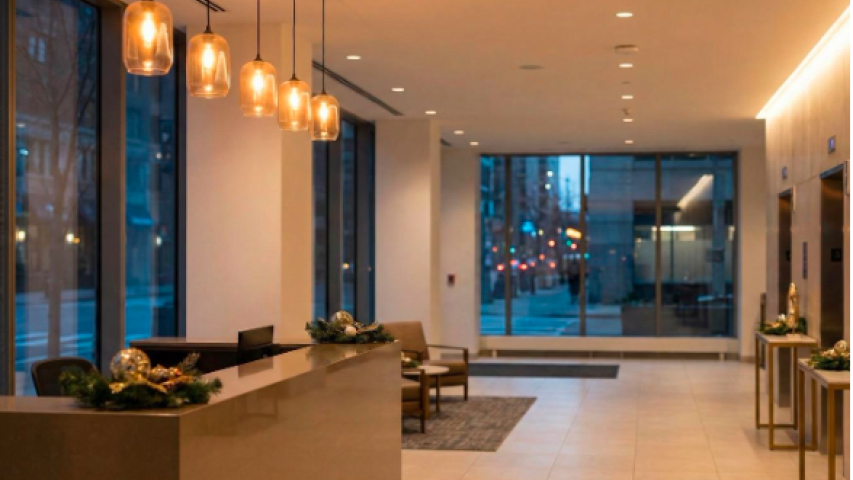
Are you starting the new year with a building that looks efficient on paper, but feels outdated in daily operation?
In Singapore’s highly competitive and sustainability driven built environment, lighting is no longer a secondary design decision. It is a core system that affects energy consumption, user comfort, and long term building performance. As organisations close the year and plan for the next, reviewing lighting strategy becomes a practical and strategic move rather than a cosmetic upgrade.
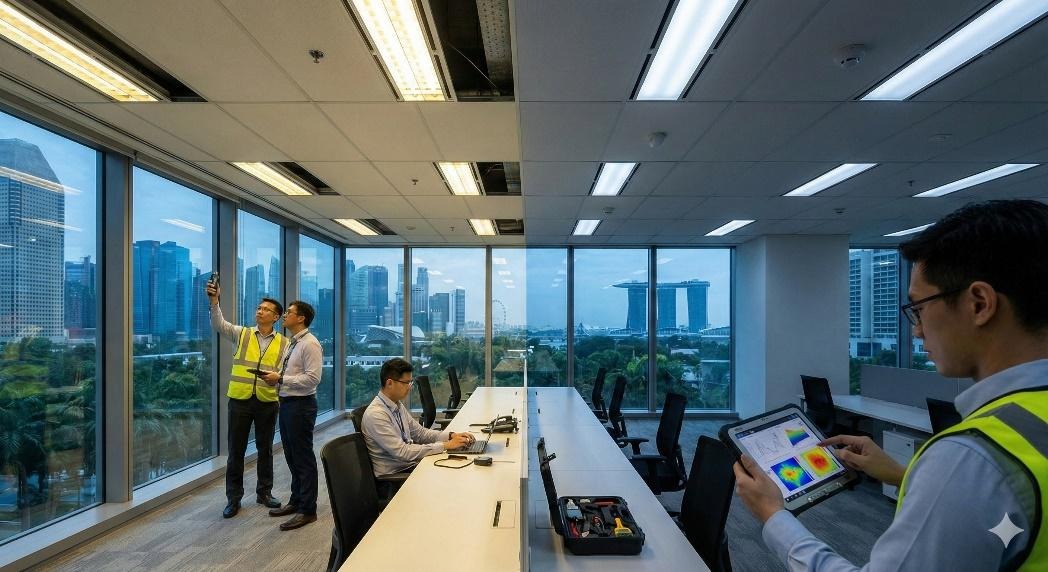
Lighting remains one of the largest controllable energy loads in commercial buildings. According to the International Energy Agency, lighting represents approximately 15 percent of global electricity use, and the combination of efficient luminaires with smart controls can reduce consumption by up to 50 percent. For Singapore buildings operating under strict efficiency benchmarks and rising energy costs, a year end lighting assessment helps identify where systems are underperforming and where upgrades deliver immediate operational value.
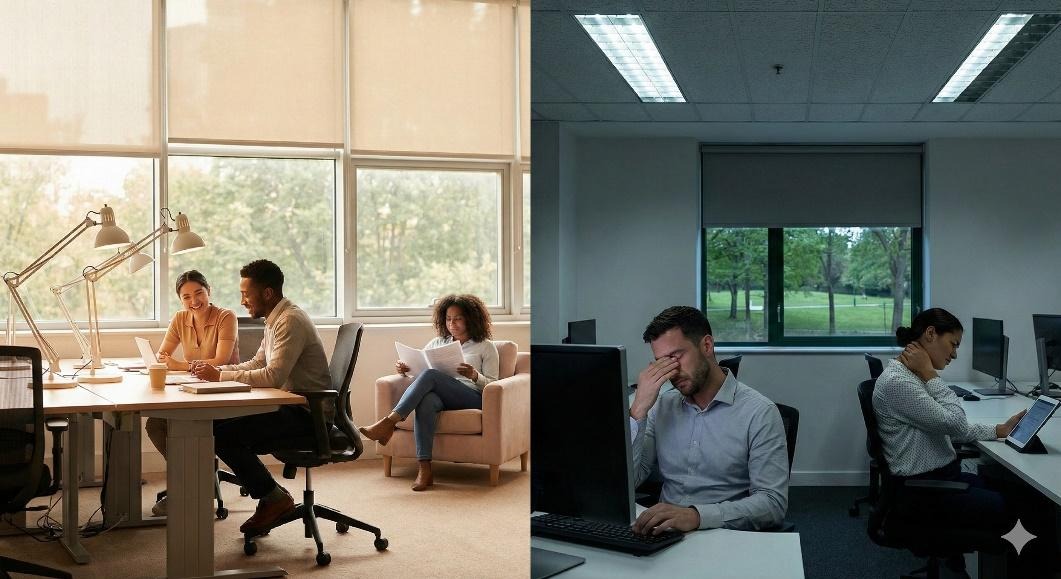
Performance is not only measured in kilowatt hours. Lighting has a direct impact on how people experience and use a space every day. Research by the World Green Building Council shows that appropriate illumination levels, good glare control, and access to daylight significantly improve focus, comfort, and overall workplace wellbeing. Poor lighting often leads to visual fatigue and reduced productivity, issues that are rarely solved without revisiting the design intent. Entering a new year with a clear lighting strategy supports healthier environments and more consistent user experience across offices, retail, and commercial facilities.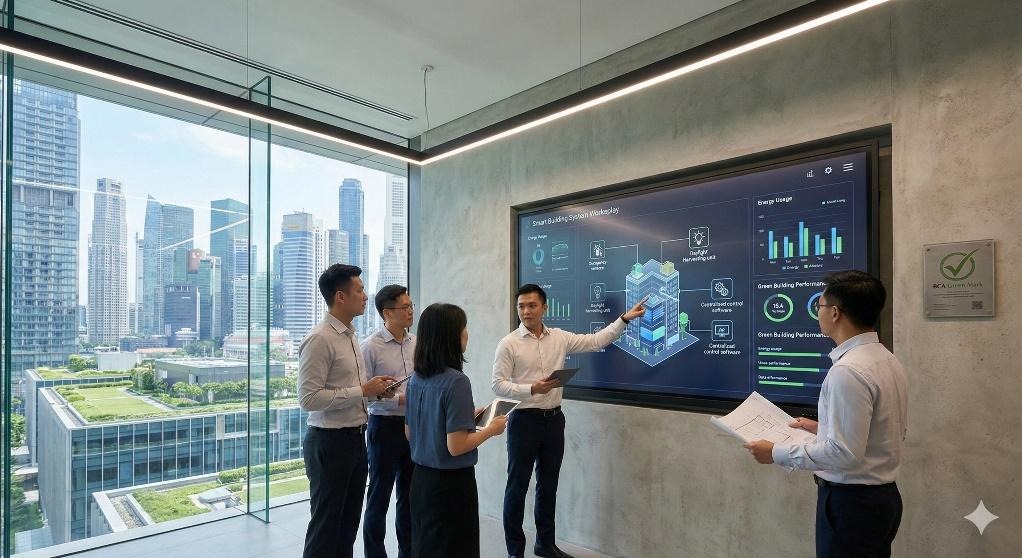
Technology is also reshaping expectations for modern buildings. Under the BCA Green Mark framework, Singapore continues to encourage smarter, more integrated building systems. Lighting controls such as occupancy sensing, daylight harvesting, and centralized monitoring are increasingly seen as baseline requirements. Planning these systems early, especially before new operational cycles begin, helps avoid fragmented upgrades and ensures alignment with long term sustainability goals.
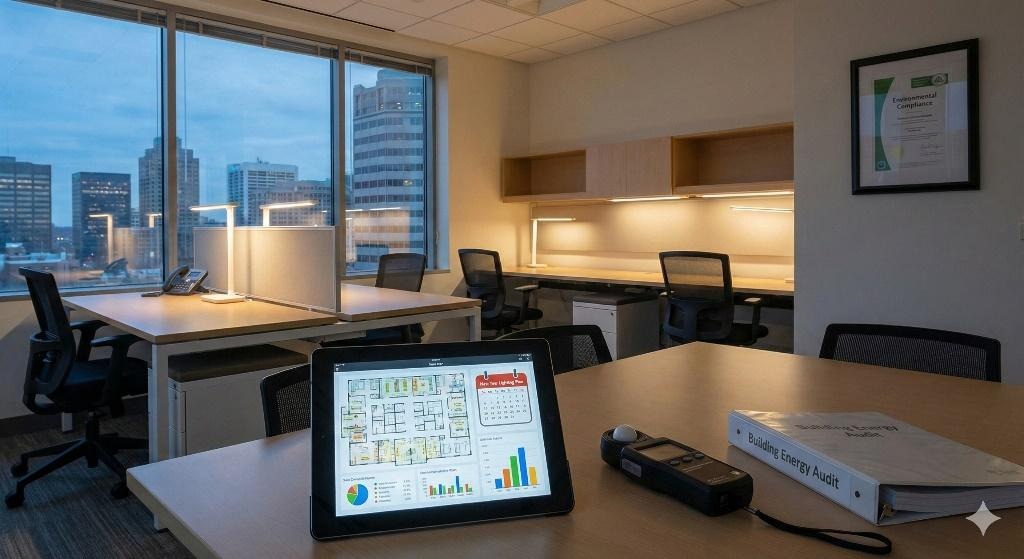
Preparing lighting for the new year is not about chasing trends. It is about making informed decisions that balance efficiency, visual comfort, compliance, and future adaptability. A structured lighting review allows building owners and operators to identify inefficiencies, optimize user experience, and plan upgrades with clarity rather than urgency. When lighting is addressed proactively, it becomes a strategic asset instead of an ongoing operational challenge.
As you plan for the year ahead, how often does lighting feature in your building strategy discussions? Have you seen measurable improvements after a lighting upgrade, or faced challenges caused by delayed decisions? Share your experience or perspective in the comments and let’s exchange practical insights.
References
- International Energy Agency. “Energy Efficiency 2023: Lighting.”
https://www.iea.org/reports/energy-efficiency-2023/lighting - World Green Building Council. “Health, Wellbeing and Productivity in Offices.”
https://www.worldgbc.org/what-we-do/health-wellbeing-and-productivity/ - Building and Construction Authority (BCA) Singapore. “BCA Green Mark 2021.”
https://www1.bca.gov.sg/buildsg/sustainability/green-mark-certification-scheme - U.S. Department of Energy. “Energy Savings Potential of Solid-State Lighting in General Illumination Applications.”
https://www.energy.gov/eere/ssl/energy-savings-potential-solid-state-lighting-general-illumination-applications - Illuminating Engineering Society. “Lighting and Human Health.”
https://www.ies.org/standards/lighting-and-human-health/